
Identificando estrategias efectivas para combatir la desnutrición infantil en el Perú
DOI:
https://doi.org/10.21678/apuntes.69.630Keywords:
Child development, malnutrition, Peru, public healthAbstract
In Peru one out of four children suffers chronic malnutrition and inequalities among different income quintiles are significant. The consequences of this situation are alarming: limits future capacities and productivity, has harmful effects on health, and perpetuates poverty across generations. Using a two stages least squares methodology, this research analyzes the causes of child malnutrition in Peru based in series of demand factors, such as health status and parents’ education, and supply factors such as sewerage infrastructure and Programa Integral de Nutrición (PIN) coverage. The results show child’s weight at birth, district’s malnutrition rate, rations of food provided by PIN, mother’s age and child’s gender are the most important determinants of child malnutrition. When considering wealth quintiles, for the two poorest ones, the floor material, access to potable water, sewerage, cleaner cooking fuel, and food intake variety are among the most important determinants of malnutrition. Finally, broadening the PIN program coverage is the most effective measure relative to its costs. However, other policies, such as increasing the number of nutritionists and health posts available per district should also be implemented.Downloads
Download data is not yet available.
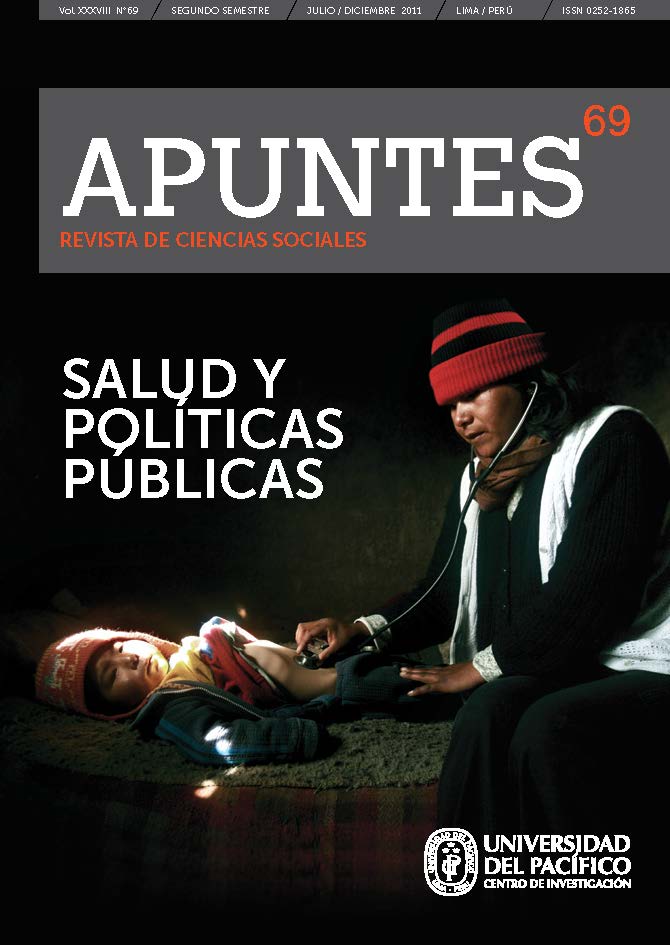
Downloads
Published
2011-06-24
Issue
Section
Articles
License
Apuntes publishes all its articles and reviews under a Creative Commons Attribution (CC BY 4.0) license with the objective of promoting academic exchange worldwide. Therefore, articles and book reviews can be distributed, edited, amended, etc., as the author sees fit. The only condition is that the name of the author(s) and Apuntes. Revista de Ciencias Sociales (as the publisher) be cited.
How to Cite
Beltrán, A., & Seinfeld, J. (2011). Identificando estrategias efectivas para combatir la desnutrición infantil en el Perú. Apuntes. Social Sciences Journal, 38(69), 7-54. https://doi.org/10.21678/apuntes.69.630
.jpg)


