
Public Pension Expenditures in Latin America and Projections to 2075: Evidence from Chile, Peru, Colombia, and Mexico
DOI:
https://doi.org/10.21678/apuntes.79.867Keywords:
Social security, public pension expenditure, aging, defined benefit, non-contributory pensionsAbstract
This paper analyzes the main factors behind pension expenditures and projects their evolution to 2075 in four Latin American countries: Chile, Peru, Colombia, and Mexico. Pension expenditures are defined as those included in the national budget and allocated to specific benefit plans and to non-contributory pensions. Using a model developed by Clements et al. (2013), it was found that, currently, expenditures are between 1.8 and 6.4 percent of GDP. However, they will rise between 2 and 4 times by 2075, mainly due to population aging. Two simulations were conducted. The first boosted the aging process while the second assumed universal coverage of non-contributory pensions. Expenditures significantly increased in both scenarios and it is recommended that countries pay more attention to aging and its consequences in the long run, especially to the fiscal sustainability of pension systems, in order to permanently estimate pension liabilities, improve accounting, and to build up reserve funds.Downloads
Download data is not yet available.
References
Alessie, R., Kapteyn, A., & Klijn, F. (1997). Mandatory Pensions and Personal Savings in the Netherlands. De Economist, 145(3), 291-324.
Alonso, J., Hoyo, C., & Tuesta, D. (2014). Un modelo para el sistema de pensiones en México: diagnóstico y recomendaciones (Documento de trabajo N° 14/07). México: BBVA-Centro de Estudios Económicos.
Arenas de Mesa, A., Benavides, P., Gonzáles, L., & Castillo, J. (2008). La reforma previsional chilena: proyecciones fiscales 2009-2025. Santiago de Chile: Dirección de Presupuestos-Ministerio de Hacienda.
Arenas de Mesa, A., & Gana, P. (2005). Proyecciones del gasto fiscal previsional en Chile, bonos de reconocimiento: 2005-2038. Santiago de Chile: Dirección de Presupuestos-Ministerio de Hacienda.
Auerbach, A., Gokhale, J., & Kotlikoff, L. (1994). Generational Accounting: A Meaningful Way to Evaluate Fiscal Policy. The Journal of Economic Perspectives, 8(1), 73-94.
Bernal, N., Muñoz, A., Perea, H., Tejada , J., & Tuesta, D. (2008). Una mirada al sistema peruano de pensiones. Lima: Banco Continental BBVA-Centro de Estudios Económicos.
Bernal, N., & Vermeulen, F. (2014). The Impact of an Increase in the Legal Retirement Age on the Effective Retirement Age. De Economist, 162(2), 115-145.
Bosch, M., Berstein, S., Castellani, F., Oliveri, M., Villa, J. (2015). Diagnóstico del sistema previsional colombiano y opciones de reforma (Nota técnica N° 825). Washington D. C.: Inter-American Development Bank.
Bosch, M., Melquizo, A., & Pagés, C. (2013). Mejores pensiones, mejores trabajos: hacia la cobertura universal en América Latina y el Caribe. Washington D. C.: Inter-American Development Bank.
CEPAL (2013a). Estimaciones y proyecciones de población a largo plazo 1950–2100. Santiago de Chile, 2013. Santiago de Chile: Cepal. Recuperado de: http://www.cepal.org/es/estimaciones-proyecciones-poblacionlargo-plazo-1950-2100
CEPAL (2013b). Observatorio demográfico, 2013. Santiago de Chile: CEPAL.
CEPAL (2013c). Panorama social de América Latina 2013. Informe anual. Reporte técnico. CEPAL.
Clavijo, S., Vera, A., Malagón, D., Vera, N., & Cabra, M. (2013). El pasivo pensional de Colombia: cálculo de su valor presente neto y sensibilidades paramétricas». Bogotá: ANIF. Recuperado de: http://anif.co/sites/default/files/uploads/Anif-pensiones0913_0.pdf
Clements, B., Coady, D., Eich, F., Gupta, S., Kangur, A., Shang, B., & Soto, M. (2013). The Challenge of Public Pension Reform in Advanced and Emerging Economies (Documento N° 275). Washington D. C.: International Monetary Fund.
Galiani, S., Gertler, P., & Bando, R. (2016). Non-contributory Pensions. Labour Economics, 38, 47-58. DOI: 10.1016/j.labeco.2015.11.003
Holzmann, R. (2013). Sistemas de pensiones en el mundo y sus reformas: factores, tendencias y desafíos mundiales. Revista Internacional de Seguridad Social, 66(2), N° 2, 1-34.
Holzmann, R., Robalino, D., & Takayama, N. (eds.) (2009). Closing the Coverage Gap: Role of Social Pensions and other Retirement Income Transfers. Washington D. C.: World Bank Publications.
IFA (2015). Informe financiero y actuarial. IFA 2015. ISSSTE. Recuperado de: http://www2.issste.gob.mx/images/downloads/instituto/quienes-somos/ifa_2015.pdf
Kotlikoff, L. (1996). Privatizing Social Security. How it Works and Why It Matters. En Poterba, J. (Ed.), Tax Policy and the Economy,vol. 10 (pp. 1-32). Cambridge, Massachusetts: MIT Press.
Levy, S., & Schady, N. (2013). Latin America’s Social Policy Challenge: Education, Social Insurance, Redistribution. The Journal of Economic Perspectives, 27(2), 193-218.
Mesa-Lago, C. (2000). Estudio comparativo de los costos fiscales en la transición de ocho reformas de pensiones en América Latina. Santiago de Chile: CEPAL.
Mesa-Lago, C. (2004). Las reformas de pensiones en América Latina y su impacto en los principios de la seguridad social. Santiago de Chile: CEPAL.
Mitchell, O., & Phillips, J. (2006). Social Security Replacement Rates for Alternative Earnings Benchmarks (Documento de trabajo PRC WP 20006-6). Pennsylvania: The Wharton School / University of Pennsylvania.
Novella, R., & Olivera, J. (2014). Mental Retirement and Non-contributory Pensions for the Elderly Poor in Peru (Documento de discusión DPS 14 5). Lovaina: KU Leuven-Center for Economic Studies.
OCDE (2016). Estudio de la OCDE sobre los sistemas de pensiones: México. Reporte técnico. París: OCDE.
Olivera, J. (2009). Welfare, Inequality and Financial Consequences of a Multi-Pillar Pension System. A Reform in Perú (Documento de Trabajo Ecineq 2010-152). Verona: SSRN.
Olivera, J., & Zuluaga, B. (2014). The Ex-Ante Effects of Non-contributory Pensions in Colombia and Perú. Journal of International Development, 26(7), 949-973.
Piggot, J., Robalino, D., & Jimenez-Martin, S. (2008). Incentive Effects of Retirement Income Transfers. Closing the Coverage Gap: The Role of Social Pensions and Other Retirement Income Transfers. Washington D. C.: World Bank Publications.
SEDESOL (2010). Informe final del estudio de impacto del programa de atención de adultos mayores 70 y más. México: SEDESOL.
Sinha, T. (2012). Estimating Future Pension Liability of the Mexican Government. Inter-American Development Bank.
United Nations (2014). World Population Prospects: The 2012 Revision. Methodology of the United Nations Population Estimates and Projections (ESA/P/WP.235). Nueva York: United Nations-Department ofEconomic and Social Affairs-Population Division.
Whiteford, P. (1995). The Use of Replacement Rates in International Comparisons of Benefit Systems (Documento de discusión N° 54). Sidney: Social Policy Research Centre.
Alonso, J., Hoyo, C., & Tuesta, D. (2014). Un modelo para el sistema de pensiones en México: diagnóstico y recomendaciones (Documento de trabajo N° 14/07). México: BBVA-Centro de Estudios Económicos.
Arenas de Mesa, A., Benavides, P., Gonzáles, L., & Castillo, J. (2008). La reforma previsional chilena: proyecciones fiscales 2009-2025. Santiago de Chile: Dirección de Presupuestos-Ministerio de Hacienda.
Arenas de Mesa, A., & Gana, P. (2005). Proyecciones del gasto fiscal previsional en Chile, bonos de reconocimiento: 2005-2038. Santiago de Chile: Dirección de Presupuestos-Ministerio de Hacienda.
Auerbach, A., Gokhale, J., & Kotlikoff, L. (1994). Generational Accounting: A Meaningful Way to Evaluate Fiscal Policy. The Journal of Economic Perspectives, 8(1), 73-94.
Bernal, N., Muñoz, A., Perea, H., Tejada , J., & Tuesta, D. (2008). Una mirada al sistema peruano de pensiones. Lima: Banco Continental BBVA-Centro de Estudios Económicos.
Bernal, N., & Vermeulen, F. (2014). The Impact of an Increase in the Legal Retirement Age on the Effective Retirement Age. De Economist, 162(2), 115-145.
Bosch, M., Berstein, S., Castellani, F., Oliveri, M., Villa, J. (2015). Diagnóstico del sistema previsional colombiano y opciones de reforma (Nota técnica N° 825). Washington D. C.: Inter-American Development Bank.
Bosch, M., Melquizo, A., & Pagés, C. (2013). Mejores pensiones, mejores trabajos: hacia la cobertura universal en América Latina y el Caribe. Washington D. C.: Inter-American Development Bank.
CEPAL (2013a). Estimaciones y proyecciones de población a largo plazo 1950–2100. Santiago de Chile, 2013. Santiago de Chile: Cepal. Recuperado de: http://www.cepal.org/es/estimaciones-proyecciones-poblacionlargo-plazo-1950-2100
CEPAL (2013b). Observatorio demográfico, 2013. Santiago de Chile: CEPAL.
CEPAL (2013c). Panorama social de América Latina 2013. Informe anual. Reporte técnico. CEPAL.
Clavijo, S., Vera, A., Malagón, D., Vera, N., & Cabra, M. (2013). El pasivo pensional de Colombia: cálculo de su valor presente neto y sensibilidades paramétricas». Bogotá: ANIF. Recuperado de: http://anif.co/sites/default/files/uploads/Anif-pensiones0913_0.pdf
Clements, B., Coady, D., Eich, F., Gupta, S., Kangur, A., Shang, B., & Soto, M. (2013). The Challenge of Public Pension Reform in Advanced and Emerging Economies (Documento N° 275). Washington D. C.: International Monetary Fund.
Galiani, S., Gertler, P., & Bando, R. (2016). Non-contributory Pensions. Labour Economics, 38, 47-58. DOI: 10.1016/j.labeco.2015.11.003
Holzmann, R. (2013). Sistemas de pensiones en el mundo y sus reformas: factores, tendencias y desafíos mundiales. Revista Internacional de Seguridad Social, 66(2), N° 2, 1-34.
Holzmann, R., Robalino, D., & Takayama, N. (eds.) (2009). Closing the Coverage Gap: Role of Social Pensions and other Retirement Income Transfers. Washington D. C.: World Bank Publications.
IFA (2015). Informe financiero y actuarial. IFA 2015. ISSSTE. Recuperado de: http://www2.issste.gob.mx/images/downloads/instituto/quienes-somos/ifa_2015.pdf
Kotlikoff, L. (1996). Privatizing Social Security. How it Works and Why It Matters. En Poterba, J. (Ed.), Tax Policy and the Economy,vol. 10 (pp. 1-32). Cambridge, Massachusetts: MIT Press.
Levy, S., & Schady, N. (2013). Latin America’s Social Policy Challenge: Education, Social Insurance, Redistribution. The Journal of Economic Perspectives, 27(2), 193-218.
Mesa-Lago, C. (2000). Estudio comparativo de los costos fiscales en la transición de ocho reformas de pensiones en América Latina. Santiago de Chile: CEPAL.
Mesa-Lago, C. (2004). Las reformas de pensiones en América Latina y su impacto en los principios de la seguridad social. Santiago de Chile: CEPAL.
Mitchell, O., & Phillips, J. (2006). Social Security Replacement Rates for Alternative Earnings Benchmarks (Documento de trabajo PRC WP 20006-6). Pennsylvania: The Wharton School / University of Pennsylvania.
Novella, R., & Olivera, J. (2014). Mental Retirement and Non-contributory Pensions for the Elderly Poor in Peru (Documento de discusión DPS 14 5). Lovaina: KU Leuven-Center for Economic Studies.
OCDE (2016). Estudio de la OCDE sobre los sistemas de pensiones: México. Reporte técnico. París: OCDE.
Olivera, J. (2009). Welfare, Inequality and Financial Consequences of a Multi-Pillar Pension System. A Reform in Perú (Documento de Trabajo Ecineq 2010-152). Verona: SSRN.
Olivera, J., & Zuluaga, B. (2014). The Ex-Ante Effects of Non-contributory Pensions in Colombia and Perú. Journal of International Development, 26(7), 949-973.
Piggot, J., Robalino, D., & Jimenez-Martin, S. (2008). Incentive Effects of Retirement Income Transfers. Closing the Coverage Gap: The Role of Social Pensions and Other Retirement Income Transfers. Washington D. C.: World Bank Publications.
SEDESOL (2010). Informe final del estudio de impacto del programa de atención de adultos mayores 70 y más. México: SEDESOL.
Sinha, T. (2012). Estimating Future Pension Liability of the Mexican Government. Inter-American Development Bank.
United Nations (2014). World Population Prospects: The 2012 Revision. Methodology of the United Nations Population Estimates and Projections (ESA/P/WP.235). Nueva York: United Nations-Department ofEconomic and Social Affairs-Population Division.
Whiteford, P. (1995). The Use of Replacement Rates in International Comparisons of Benefit Systems (Documento de discusión N° 54). Sidney: Social Policy Research Centre.
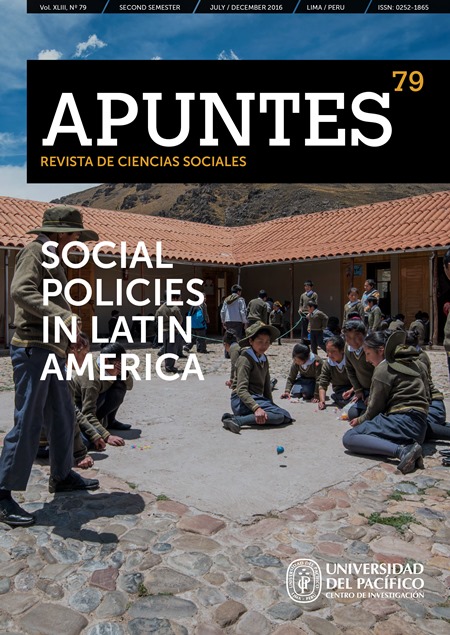
Downloads
Published
2016-09-28
How to Cite
Bernal, N. (2016). Public Pension Expenditures in Latin America and Projections to 2075: Evidence from Chile, Peru, Colombia, and Mexico. Apuntes. Social Sciences Journal, 43(79), 79–128. https://doi.org/10.21678/apuntes.79.867
Issue
Section
Articles
License
Apuntes publishes all its articles and reviews under a Creative Commons Attribution (CC BY 4.0) license with the objective of promoting academic exchange worldwide. Therefore, articles and book reviews can be distributed, edited, amended, etc., as the author sees fit. The only condition is that the name of the author(s) and Apuntes. Revista de Ciencias Sociales (as the publisher) be cited.

.jpg)

