
Apuntes 66
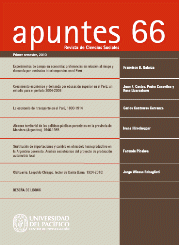
The articles in this issue: Analyze the effect of education and risk aversion in the selection of productive projects that involve intertemporal contracts in rural Peru; Study the increased demand for higher education in Peru and how this has been incentivized by the recent economic expansion; Review the transport economy in Peru in the period 1800-1914, and the positive and negative effects that the introduction of railroads on producers, traders, muleteers, cattle herders, agriculturalists, and veterinarians; Investigate the territorial reach of Peronist health and education policies in the province of Mendoza, Argentina in the years 1946-1955, and the actual effects of these policies; Demonstrate how a set of heterogeneous factors (sectoral regulations, public capital, government propaganda, private businesses, officials, workers, and users) were involved in implementing the Peronist project in the 1950s.

.jpg)

